
FoodJet’s butter machine applies an even, consistent layer of butter (or similar pumpable spreads) on industrial bread products. Vision guidance places the deposit exactly where it needs to be, reducing manual labour and product waste. The result is cleaner processing and more consistent sandwiches—at line speed.
What the butter machine does
FoodJet’s butter machine applies a consistent layer of butter or other pumpable spreads on industrial bread products such as slices, buns, and baguettes. Using vision guidance, the depositor places the butter exactly where it is needed—even when products are not perfectly aligned. This helps you achieve repeatable coverage with less manual work and less product waste.
- Even coverage across each product (no “dry bite / wet bite” variation)
- Repeatable portioning per product
- Less manual handling and less variability between operators
- Designed to integrate into continuous production lines
Why automate butter application
Manual buttering is hard to keep consistent at industrial line speeds. Automation reduces variation, improves product consistency, and helps control costs by preventing over-application and unnecessary cleaning.
- Uneven coverage → inconsistent taste and appearance
- Manual work → labour, ergonomics, and operator-to-operator variation
- Over-application → higher fat cost, more mess, more cleaning time
- Line interruptions → stops for refilling, adjustments, or rework
How vision-guided butter depositing works
The system uses cameras and software to dose based on each product's actual position.
- Detect – vision identifies each bread product’s position and orientation on the belt
- Calculate – software determines the deposit location and pattern (based on your recipe)
- Deposit – depositor head(s) apply butter/spread with controlled dosing
Suitable products and constraints
This solution is designed for butter and similar spreads that are pumpable under controlled process conditions. To achieve stable dosing, the product’s temperature and viscosity must be within an agreed operating window.
- Product must remain pumpable and stable during production (temperature/viscosity control)
- Particulates: only if agreed and tested (risk of nozzle blockage and pattern distortion)
- Highly irregular surfaces can influence perceived coverage (we tune patterns accordingly)
System configuration options
FoodJet configures the butter depositing system to match your product range, throughput, and available line space. We focus on stable dosing, clean operation, and fast recipe changeovers.
Mechanical & layout:
- Configurable number of depositor heads (based on lane count and throughput)
- Frame and belt integration to fit existing conveyors
- Deposit height and working width are configured to your product dimensions
Product handling:
- Temperature-controlled product supply options (to keep butter/spread pumpable)
- Tank and feed concept selected for your runtime and changeover approach
Control & integration:
- Vision-based tracking per product (no mechanical alignment required)
- Recipe settings for deposit location/pattern (per SKU)
- Interfaces for line start/stop and production signals (as required)
Changeovers and cleaning
The system is designed for controlled product handling and predictable cleaning routines. The exact cleaning approach depends on your product, hygiene requirements, and whether you run single-product or multi-product schedules.
Typical applications
Examples of where butter depositing is used in industrial bakery and sandwich production:
- Buttering bread slices before sandwich assembly
- Buttering buns for burger lines
- Buttering baguette halves for filled baguettes
- Garlic bread preparation (butter/spread application before baking)
- Premium “even coverage” applications where appearance matters
Check out videos
Check all videos-
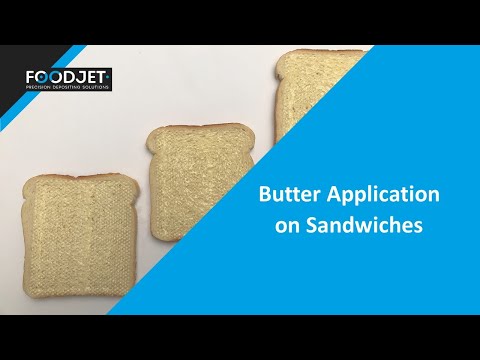
Butter Application on Sandwiches
Apply even layers of butter onto your sandwiches with accuracy and speed.
Talk to an engineer
If you share a few line parameters, we can quickly determine the right configuration and confirm product suitability. The goal is a stable process: consistent coverage, predictable consumption, and clean operation.
What to bring to the first call:
- Bread type(s), dimensions, and lane count
- Target throughput (products/min) and available line space
- Butter/spread type and how you condition it today (temperature, pumpability, particulates yes/no)
- Desired result: coverage area, deposit weight or “butter per piece”, pattern preference
- Hygiene requirements and cleaning approach (manual/CIP expectations)